Scrap Grinder

  • Home
  • Scrap Grinder
Scrap Grinder

Scrap Grinder

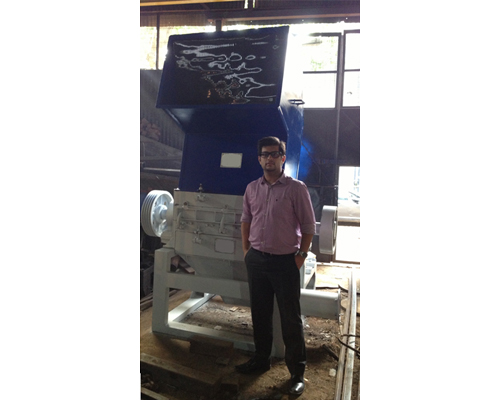
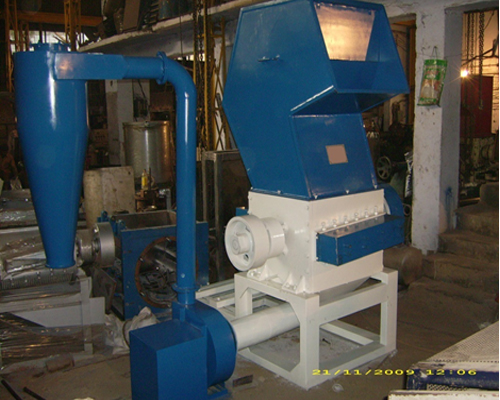
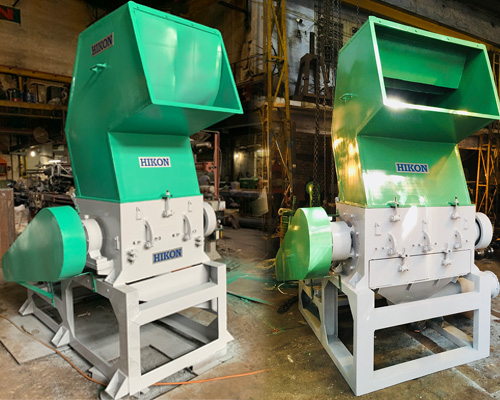
A Plastic Scrap Crusher in India is a machine that uses physical force to smash plastic trash. It helps workers protect themselves and reduce pollution caused by the combustion of plastics. These plastic scarp crushers for waste are crucial equipment for every company manufacturing plastic items. They are necessary for recycling and help businesses save both money and time.
Top motives for deploying Plastic Scrap Crusher

Reduce your environmental footprint while cutting production costs.

The primary benefits of on-site plastic recycling include:

Reduced Waste: When you buy a plastic scrap crusher, you can recycle all of your spent plastics rather than simply tossing them away. Consequently, less garbage is disposed of in landfills, conserving the environment.

Increased Productivity: A suitable plastic waste crusher may increase your plant’s efficiency by crushing big pieces of plastic into tiny pellets. Using these small pellets again can lower production costs.

Utilisation of Space: A plastic scrap crusher is ideal for firms with limited space since it takes up very little space. Furthermore, this eliminates the need for different devices to break down distinct forms of plastic trash.

Savings Potential: Firms may recycle their plastic goods using crusher equipment instead of depending on third-party services. They save time and money by not having to pay someone else to reclaim their goods. Furthermore, it reduces the amount of garbage disposed in landfills.

Increased Efficiency: When plastics are crushed into little bits, they may be treated more quickly and easily. This speeds up and optimises the recycling process, thereby lowering business expenses.

Conclusion

Any firm that manufactures or utilises plastic goods requires a Plastic Scarp Crusher in India. It helps with cost reduction, efficiency, and recycling. Why should we hire a crusher to handle our plastic waste? The severity of the problem of environmental contamination caused by improper plastic disposal has increased in recent years. By crushing these waste plastic particles, we can prevent them from becoming airborne and ending up in the seas and other bodies of water. In this approach, we can reduce environmental damage and advance a circular economy.

Scrap Grinder
Scrap Grinder
Scrap Grinder
Scrap Grinder
Scrap Grinder
MODEL BLADE LENGTH (IN INCHES) TOTAL BLADES MAIN DRIVE (KW) OUTPUT (KG/HR)
HIKON G9 9 4 3.7 30–50
HIKON G10 10 5 5.6 50–60
HIKON G12 12 5 7.5 60–75
HIKON G15 15 5 11 120–150
HIKON G18 18 5 11 / 15 180–220
HIKON G20 20 5 15 150–200
HIKON G24 24 6 18 200–250
HIKON G28 28 8 22 250–300
HIKON G30 30 10 30 300–400
HIKON G32 32 10 30 400–500
HIKON G36 36 12 37 500–600
HIKON G40 40 22 56 800–1000
HIKON G42 42 24 56 1000–1200
HIKON G48 48 20 / 24 56 1000–1500
SCRAP GRANULATORS / GRINDERS
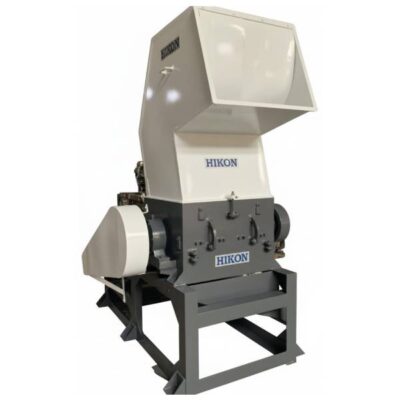
Hikon has a wide range of scrap granulators / grinders for different applications in plastic waste cutting.
1. Wet grinders / granulators for PET / PE / PP / PVC / PS / HIPS / ABS / PC / NYLON / DERLIN / HDPE etc.
Hikon Grinder is been designed to cut the waste materials or scrap of plastic sheets etc into thin Granules so that it can be further used in production.
Salient Features :-
  • • The Hikon Granulator / grinder is built tough and suited to the most demanding applications.
  • • The heavy duty fabricated steel rotor and cutting chamber are capable of withstanding high shock loads.
  • • Bearings, knife mounts and the rotor have been over engineered and balanced to ensure a long service life.
  • • The well thought out design of the machines allows fast, safe access for cleaning and maintenance.
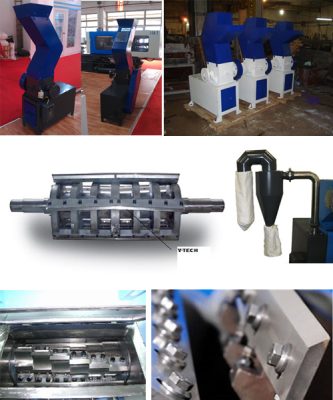
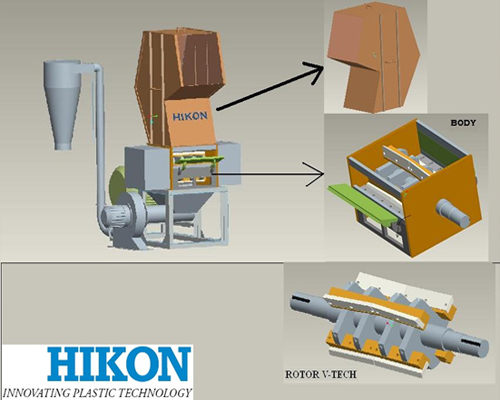
  • • Hikon Granulator / Grinder is also provided with dust collector to obtain dust free flakes.
  • • Different types of rotor (V-tech, staggered for particular applications).
  • • BLADES MADE UP OF D-2 MATERIAL WHICH ARE PRECISELY TEMPERED TO WITHSTAND HEAVY LOAD AND ENSURE LONG LIFE

Frequently Asked Questions

Most machines look solid in a catalogue but fail under the heat of a 10-hour shift in an Indian industrial hub. A Plastic Scrap Crusher in India has to deal with problems of voltage spikes, dust, and impure scraps every day.

If the frame is made of thin plates instead of reinforced steel, the machine vibrates, the blades get disoriented, and the bearings seize. A cheap machine is a curse that ends up costing double by the end of the first year.

The quality of the machine depends on two factors. These factors are the quality of the blades and the quality of the screen. For example, when the blades are made of soft steel, after a few days, the blades become dull. This leads to tearing rather than cutting. This causes the formation of dust.

The blades of a high-performance Plastic Scrap Crusher are made of high-carbon high-chrome steel. This causes the plastic to be cut cleanly like scissors.

One machine doesn't handle everything without the right rotor. For heavy blow-moulded "lumps" or thick pipes, a staggered-blade rotor is needed to "bite" into the material. For thin PP/PE films, a flat-blade design is better to prevent the film from wrapping around the shaft and stalling the motor.

A professional Plastic Scrap Crusher in India requires a customised rotor because a "one size fits all" approach leads to a choked machine and a tripped breaker.

In a busy facility, material colours change daily. If switching from blue HDPE to white PP takes three hours of cleaning, productivity tanks. A well-engineered Plastic Scrap Crusher uses a hinged body or a "quick-open" hopper.

This allows an operator to swap the screen and blow out the internals in 15 minutes. If the machine is a nightmare to open, labour costs go up, and the risk of colour contamination in the final batch increases.

Electricity is the biggest recurring bill. A crusher using a 50HP motor but only delivering 300kg an hour is a financial drain. Efficiency comes from the "flywheel" effect, using the momentum of a heavy-duty rotor to do the work rather than raw motor force.

High-end Plastic Scrap Crusher designs optimise the cutting angle to reduce the "load" on the motor. This can reduce the monthly power bill by 15% to 20% while keeping high output levels.